

CASE STUDY
How Chamco Custom Engineered a Brine Pumping Barge for a Saskatchewan Potash Mine
Project Background
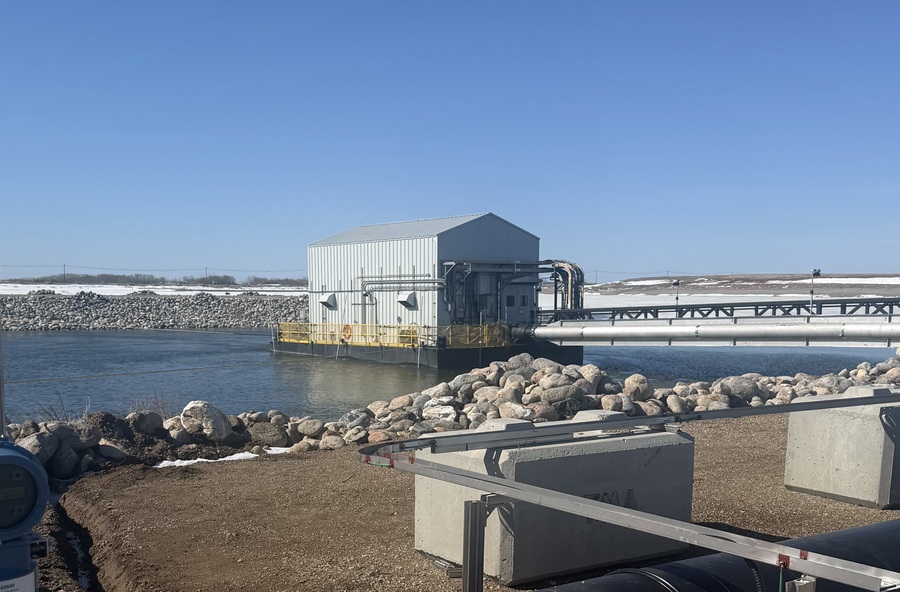
A global mining company needed a dependable way to pump brine at its potash mine in Saskatchewan. Brine is a byproduct of potash production that the mine can pump back into its operations and reuse, but it is one of the hardest products in the industry to move. Potash operations have tried shore-based units, submersible pumps, and other floating designs to handle it, with limited success.
Chamco’s involvement in the project dates back over a decade, to when they completed the original design before the project was ultimately shelved. Potash prices had dropped, the mine was still in its early stages, and it wasn’t ready to pump brine yet.
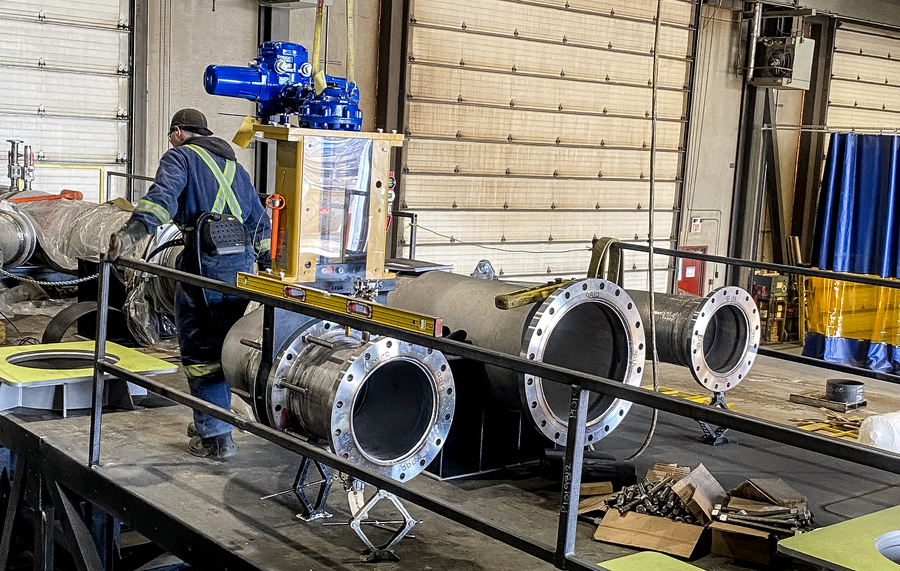
In 2020, the customer revived the project with a new engineering, procurement, and construction (EPC) firm. Chamco was awarded the engineering phase in 2021 and the procurement and fabrication phase a little over a year later. The scope covered a complete floating pump station, including four super duplex stainless steel vertical turbine pumps, stainless steel header piping, a walkway, shore-to-barge piping, a mooring system, and the barge’s overhead crane system. Chamco designed and fabricated the barge in its Calgary shop, and the customer shipped it to the site for field assembly.
The Challenges
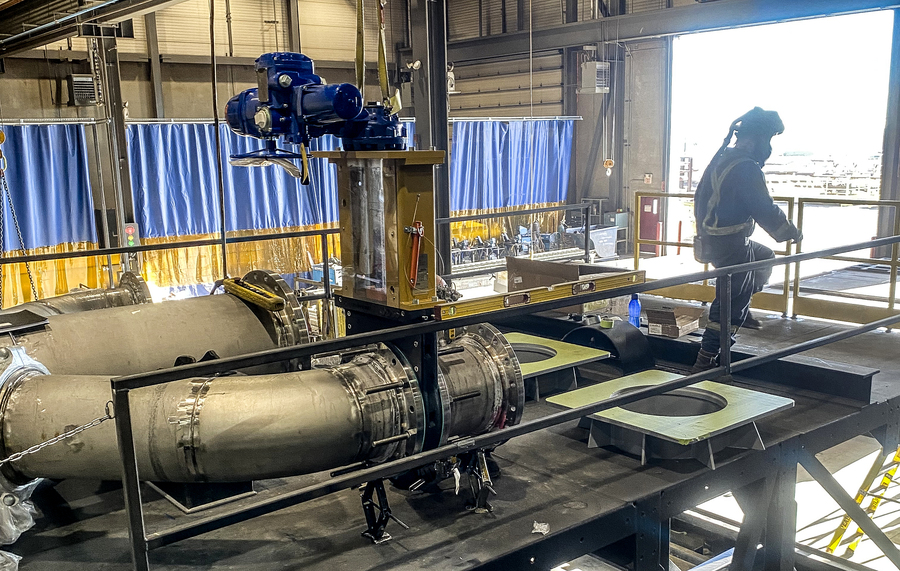
Requests to pump brine don’t come along often. At this mine, every part of the barge, from the pumps to the paint, had to be designed around the difficulties of working with brine, the site, and a demanding set of customer specifications.
Why The Customer Chose Chamco
When the Request for Quotation (RFQ) was issued, it included a design that the EPC firm had developed with another vendor during budgeting. This design included several modules that connected to a common header.
Chamco had concerns about how a modular layout would perform in a cold climate with a product that doesn’t move easily and raised them directly with the EPC firm. Afterward, Chamco was asked to quote its own design: a single, integrated barge.
Following further discussions, the customer and EPC firm agreed with Chamco’s assessment and selected our design. Chamco’s experience with barges and brine, and our ability to back up its engineering concerns, made the case.
Chamco’s in-house capability was another selling feature. Engineering and fabrication would happen in one building, close to site, with a single point of contact for the entire project.
The Solution

Chamco delivered a complete design for the barge and everything on it. Four super duplex vertical turbine pumps provide two duty pumps and two installed spares, so operators can take pumps offline for flushing, maintenance, or repairs while the barge keeps running 24/7, 365 days a year. Chamco also designed the header piping, walkway, shore-to-barge piping, and mooring system, with our scope ending where the walkway, piping, and cables reach shore.
The Results

Chamco delivered the barge on time and on budget. Schedule was a major concern for the customer, who assigned a dedicated expediter to follow the project from start to finish. The design went through multiple iterations and scope additions along the way. Even so, the finished barge met all of the customer’s expectations, and Chamco sent its crew to commission the pumps once the barge was assembled on site.
Chamco’s in-house setup kept the project moving. Engineering and fabrication were handled under one roof, with a single project manager serving as the customer’s point of contact.
With so much happening across the mine site, weekly meetings with Chamco stayed quick and positive. The customer told Chamco it was the easiest vendor to deal with, and since the installation, it has returned for additional equipment.

“This was an extremely challenging project from a lot of perspectives, and it was delivered on time, on budget, and met all of the customer’s expectations. It was a positive, collaborative project the whole way through, and we had a good relationship with the customer from start to finish.”
Other Case Studies
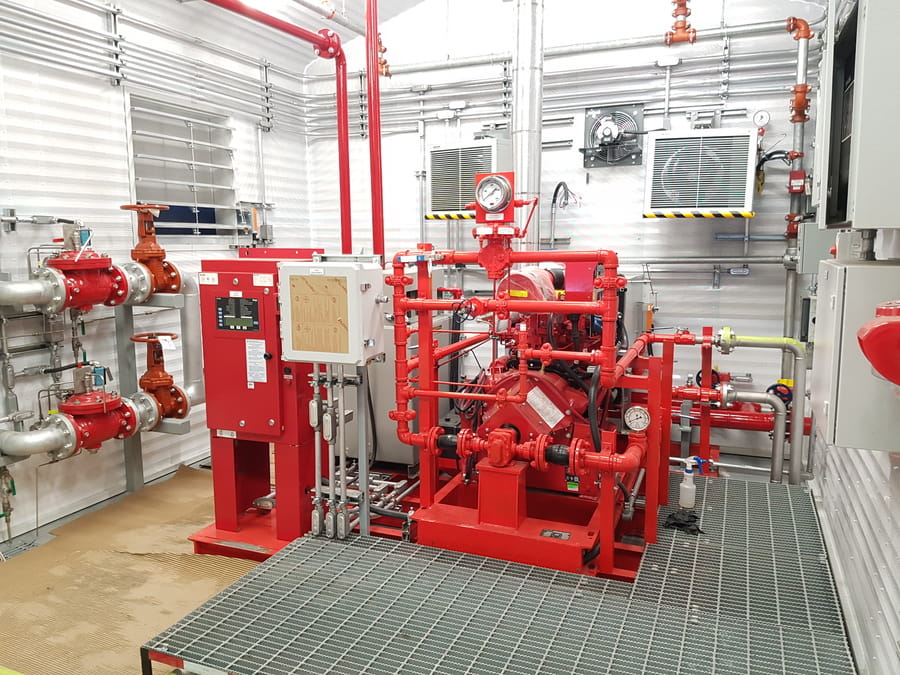
How Chamco Helps Power Facilities Meet Critical Fire Protection Requirements
chamco2026-06-17T13:43:13-06:00Chamco delivers turnkey fire pump packages for power generation facilities across North America, helping EPC firms and contractors meet strict safety, reliability, and regulatory requirements for complex power infrastructure projects.
How Chamco Built the “Cadillac” of Fire Pump Packages for a B.C. Natural Gas Facility
chamco2026-06-17T13:37:31-06:00A liquefied natural gas facility on the B.C. coast became Chamco’s largest and most complicated fire pump package to date. The site required 10,000 GPM of suppression capacity, strict human factor engineering standards, and zero tolerance for risk.

How Chamco Successfully Relocated a Barge at a Remote Mongolia Mine
chamco2025-11-06T08:55:43-07:00In 2023, a major mining company needed to relocate a Chamco-built floating pump house from one tailings pond to a newly constructed second pond. The customer required the barge to be moved fully intact on a strict timeline.